What Is Female Body Shape? How Understanding Your Shape Can Help You Dress

Women's Body Shape refers to the relationship between different body proportions, such as the shoulders, bust, waist, and hips, to understand the overall silhouette. It helps explain how clothing with different lines, shapes, and proportions creates different visual effects when worn on the body.
Understanding Body Shape is not about determining which body type is better. Instead, it is a tool that helps individuals understand their proportions and make more informed clothing choices.
How Is Women's Body Shape Determined?
Body Shape is not determined by weight, height, or clothing size alone. Instead, it considers how different body proportions relate to one another.
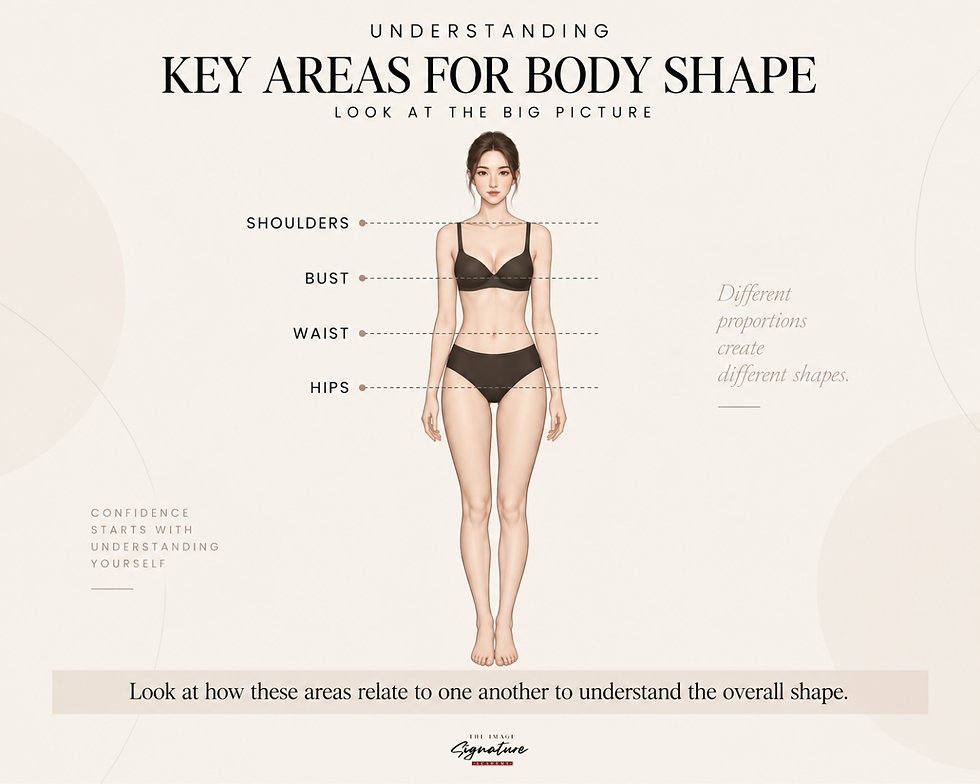
The key areas commonly assessed include:
Shoulders
Bust
Waist
Hips
For example, Body Shape analysis considers the relationship between shoulder and hip width, how defined the waist appears, and the proportions of the upper and lower body.
Body Shape does not indicate whether someone is small or large. It describes how different body proportions relate to one another.
Are Body Shape and Body Size the Same?
No. Body Size refers to overall measurements, while Body Shape describes the relationship between body proportions.
Two women who wear the same clothing size may have different Body Shapes. Similarly, women who wear different sizes may share similar Body Shape characteristics.
Therefore, knowing "What size do I wear?" does not fully explain how clothing will create a particular silhouette on the body.
Why Does the Same Clothing Look Different on Different People?
Because clothing has its own lines, shapes, and proportions, just like the body.
For example, a top with shoulder details may add visual weight to the upper body, while a voluminous skirt can create more visual volume around the lower body.
When clothing shapes interact with different body proportions, the resulting silhouette may appear different from one person to another.
Which Clothing Elements Influence the Silhouette?
Several design elements can affect the overall silhouette, including:
Neckline · Sleeve · Shoulder Detail · Waistline · Length · Fit · Volume
These elements can influence the visible lines and visual weight of an outfit without suggesting that one design is better than another.

How Does Understanding Body Shape Help with Clothing Choices?
Understanding body proportions allows clothing to be evaluated beyond simply asking whether something "looks good or not."
Instead, it encourages more specific questions:
What lines does this garment create?
Where does it add volume?
Where is the waistline positioned?
Where does the garment's length end?
Does the overall silhouette match the intended look?
This approach helps individuals make clothing choices with a clearer understanding of how garments influence the overall silhouette.
Do You Have to Dress According to Your Body Shape?
Not necessarily.
Body Shape should not be treated as a strict set of rules about what someone "must wear" or "should avoid." Styling goals vary from person to person.
Some may prefer to create visual balance, while others may want to emphasize the shoulders, define the waist, or add volume to specific areas to achieve their preferred silhouette.
Body Shape helps explain the visual effects clothing can create. Whether to choose those effects remains a personal styling decision.
What Are the Different Types of Women's Body Shapes?
Body Shapes can be classified using different systems, but five commonly recognized categories include:
Hourglass · Pear · Inverted Triangle · Rectangle · Apple
These categories provide a general framework for describing body proportions. They do not mean that everyone fits perfectly into a single Body Shape.
Even two women within the same Body Shape category may have different proportional characteristics.
Each category will be explored in more detail in the article "What Are the Different Types of Women's Body Shapes?"

Conclusion: How Does Understanding Women's Body Shape Help with Styling?
Understanding Women's Body Shape means recognizing the relationship between the shoulders, bust, waist, and hips to see how clothing lines, shapes, and proportions interact with the body.
The goal is not to change the body into a different shape, but to understand individual proportions and choose clothing that creates the desired silhouette.